Energy Efficient Windows and Doors
Quick answer: An energy efficient window keeps heat in by combining a low U-value (how much heat passes through, in W/m²K), an airtight seal and a well insulated frame. In England, replacement windows must reach a U-value of 1.4 W/m²K or Window Energy Rating band B. Idealcombi triple glazed windows reach 0.74 W/m²K for a standard size window and as low as 0.59 W/m²K for a large fixed light.
Fitting your new build home with energy windows is being increasingly important - whether you are building a PassivHaus certified home or an eco-home with all the same technologies, you want an airtight building envelope and airtight energy efficient windows.
Once your envelope is airtight and you have minimised the air-changes of your house - you want to make sure you have well insulated roof, walls, windows and doors - to avoid any cold bridges.
Even a double glazed window from Idealcombi will give you great air-tightness and great insulation. Going with Idealcombi triple glazed windows will give you even better energy efficiency with u-values of 0.74 W/m²K for a standard size window and as low as 0.59 W/m²K for a large fixed light.
What makes a window energy efficient?
Five things decide how much heat a window loses:
- Glazing: double or triple glazed units with a low-emissivity (low-E) coating and an inert gas such as argon between the panes.
- Warm edge spacers: the bar that separates the panes. A warm edge spacer cuts heat loss and condensation at the edge of the glass.
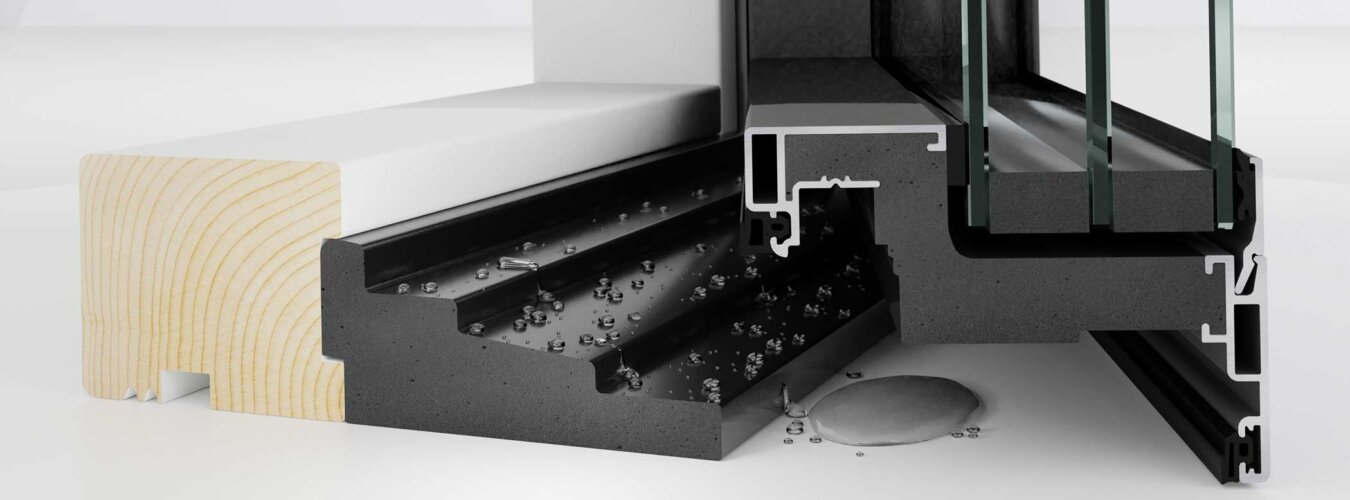
- Frame: the frame can lose more heat than the glass. Idealcombi frames use Idealcore™, which has twice the thermal efficiency of traditional composite materials and timber.
- Airtightness: gaskets and multi-point locking that pull the sash tight against the frame stop draughts.
- Installation: a window only performs as well as it is fitted. Gaps around the frame create cold bridges.
U-values explained
A U-value measures how much heat passes through one square metre of window for every degree of temperature difference between inside and outside. The lower the number, the less heat escapes.
| Window or door | U-value (W/m²K) |
|---|---|
| Idealcombi triple glazed, large fixed light | as low as 0.59 |
| Idealcombi triple glazed, standard size window | 0.74 |
| Idealcombi entrance and terrace doors (average) | 0.8 |
| Notional new build window, Approved Document L | 1.2 |
| Maximum for a replacement window in England | 1.4 |
For a full comparison, read the difference between double and triple glazing.
Window Energy Ratings: what is an A-rated window?
A Window Energy Rating (WER) grades the whole window, not just the glass. It balances heat lost through the window against free heat gained from the sun and air leakage, and gives a band from A++ (best) downwards. In England, a replacement window must meet either a U-value of 1.4 W/m²K or WER band B. Doors have their own scale, the Doorset Energy Rating (DER).
Energy efficient doors
Doors lose heat the same way windows do, through the glass, the frame and the gaps around it. In England, a replacement door must reach a U-value of 1.4 W/m²K, or a Doorset Energy Rating of band B (band C for doors that are more than 60% glazed). Idealcombi entrance and terrace doors average a U-value of 0.8 W/m²K. See our entrance doors, terrace doors and tilt and turn doors.
UK building regulations: Part L and the Future Homes Standard
Replacing windows in an existing home: Approved Document L sets a maximum U-value of 1.4 W/m²K, or WER band B, for replacement windows in England. The new window must also perform no worse than the one it replaces.
Building a new home: the Future Homes Standard was published on 24 March 2026. It applies to most new homes in England where building work is notified from 24 March 2027. Windows are now assessed one by one at their actual size and configuration, against a notional U-value of 1.2 W/m²K. The rules for replacement windows are unchanged for now.
Idealcore for better thermal performance
At Idealcombi we have developed the window of the future, using materials with superior thermal properties. Our Idealcore™ has twice the thermal efficiency of traditional composite materials and timber, along with a number of other benefits.
By using the water resistant Idealcore™ in the “wet zone” of our windows we have eliminated drainage holes and cavities, improved ease of maintenance and improved thermal performance.
Danish building regulations
Idealcombi windows are designed to comply with and even exceed the current and future danish building regulations for low energy houses.
The Danish BR 2020 is very similar to the requirements of a Passiv Haus certified house – only the requirement to air-tightness is a little stricter and you are allowed more energy for heating the house.
Recommended insulation thicknesses for roofs and walls are the same just like the recommended u-value for windows is 0.8 W/m²K for both PassivHaus and the danish BR 2020.
Idealcombi will always strive to do better than the building regulations – ensuring you very energy efficient windows.
That is why Idealcombi windows comfortably exceed UK Part L limits.
FAQS
Yes. Replacing old single or early double glazing with modern low-E double or triple glazing reduces heat loss through the windows and cuts draughts. How much you save depends on your home, your heating and the windows you replace. See how much energy efficient windows save.
Check the spacer bar between the panes for a stamped date and a low-E marking, look for a WER or BFRC label on the frame, and feel for draughts around the sash. Condensation between the panes means the seal has failed.
Usually, yes. A third pane and a second gas cavity lower the U-value. Read is triple glazing worth it?
Aluminium on its own conducts heat, so it needs a thermal break. Alu-clad windows put aluminium on the outside for weather protection, with an insulated core behind it. See alu-clad windows.
Passivhaus projects need very low U-values and an airtight installation. Idealcombi Futura+ reaches 0.74 W/m²K for a European standard size window and as low as 0.59 W/m²K for a large fixed light. See passive house windows.